Hospital Contact Centre Platform for Saudi Arabia: One Patient Conversation, Not Five Channels
What a Saudi hospital contact centre platform should do: one patient thread across calls and WhatsApp, consent status, ownership and audit trail.
Key takeaways
- Patients reach hospitals through whichever channel is closest, so the real risk is a conversation split across phone, WhatsApp and the front desk with no shared record.
- Judge a platform on patient identity, one thread per patient, ownership, approved Arabic and English templates, consent and audit, not on channel count.
- Separate service messages (appointment confirmation, referral date) from promotional messages, and record consent status before anything is sent.
- Measure first response time, first-contact resolution and appointment changes handled without a phone call. Do not promise satisfaction or revenue gains without your own baseline.
On this page
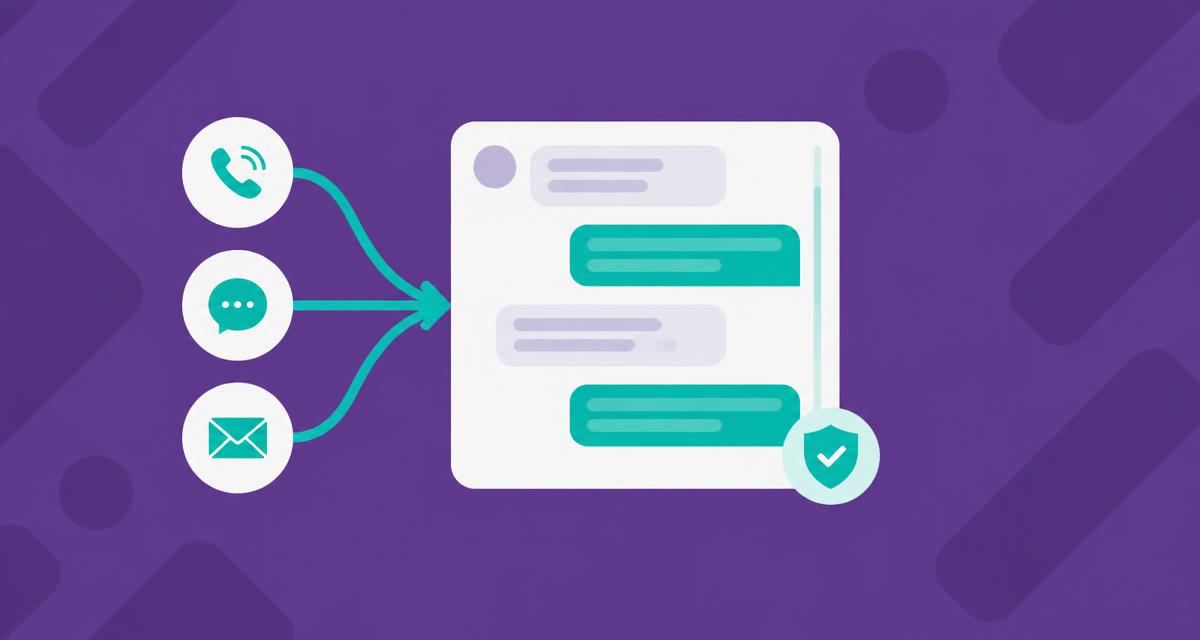
Short answer: A hospital contact centre platform for Saudi Arabia should put calls, WhatsApp, SMS and app messages into one patient conversation with a named owner, a recorded consent status and an audit trail. The test is not how many channels it supports. It is whether any agent can see what the patient was told, by whom, and what is still open.
Why the contact centre becomes the bottleneck
Ask a hospital operations director where patient requests go and the answer is rarely one place. Appointment changes arrive by phone. Result questions arrive on WhatsApp. Referral status questions reach the department secretary. Each team replies in its own way, and the next person who picks up the call cannot see what was said an hour earlier.
Large public examples show that Saudi patients already expect messaging channels. When the Ministry of Health added WhatsApp as a first stage of its 937 contact centre in May 2020, the service was delivered through a chatbot with menu options such as information, primary care centre locations, appointment booking and contact with the centre, and the centre was reported to operate 24/7 across several channels (Saudi Gazette, 9 May 2020). That is a national service in a pandemic, not a hospital benchmark, and the article is more than five years old. Its useful lesson is narrower: when volume is high, structured entry points and shared channels matter more than adding people to a phone queue.
For a hospital group, the equivalent question is practical. Can the Riyadh branch see that the Jeddah branch already rebooked this patient?
What "unified" should mean in practice
Many platforms claim an omnichannel inbox. These six properties separate a unified conversation from five inboxes in one window:
- One patient identity. The same patient is matched across phone number, WhatsApp number, and hospital record, with a clear rule for duplicates.
- One thread. A call note, a WhatsApp reply and an SMS confirmation appear in order on one record.
- Ownership and queues. Every open conversation has an owner or a queue, a status and a due time. Transfers keep the history.
- Approved templates. Arabic and English messages for confirmations, reschedules, preparation instructions and referral dates are approved once and reused, so agents do not improvise clinical wording.
- Consent and opt-out. The record shows what the patient agreed to receive and through which channel, and an opt-out applies everywhere.
- Audit trail. Who read, sent or changed what is logged and reportable.
Consent and privacy come first
Patient contact details and appointment context are personal data, and health information is treated as sensitive under Saudi data-protection rules. Before you compare features, decide with your compliance team which messages are service messages tied to care the patient requested, and which are promotional. Record consent status per channel, honour opt-outs across all channels and limit message content to the minimum needed. Do not place clinical detail in a message that a family member or a shared phone could expose.
The detailed legal position on messaging consent should be confirmed with your own legal and data-protection advisers against the current Personal Data Protection Law and its implementing regulations . Our article on PDPL-compliant patient support programmes explains the consent principles at programme level.
Eight questions to put to any contact centre vendor
- How is a patient matched across phone, WhatsApp and hospital record, and what happens when two records collide?
- Can an agent see the full conversation history before replying, including what another branch said?
- Who owns an unanswered message after hours, and who is alerted when it breaches its due time?
- Where are Arabic and English templates stored, who approves them, and can agents edit approved text?
- How is consent captured, shown to the agent and enforced at send time?
- What can a patient do without a call: confirm, reschedule, cancel, get directions, send a document?
- Which reports are available by branch and queue, and can you export time stamps for audit?
- Which of your own systems must it connect to (scheduling, hospital information system), and who builds and maintains each connection?
Ask the vendor to show a conversation that starts on WhatsApp, moves to a phone call and ends with an appointment change in the hospital system. Where the thread breaks is where your agents will start copying notes by hand.
An illustrative scenario
This is a planning scenario, not a customer case. A four-branch private hospital group in Riyadh sends an appointment confirmation on WhatsApp. The patient replies in Arabic asking to move the visit to a branch nearer home. In the old process, the message sits in a shared phone, and the patient later phones the call centre, where a different agent knows nothing about it.
With a unified thread, the reply lands in the scheduling queue with the patient's record already attached. The agent offers two slots at the nearer branch, the patient confirms, and the hospital system updates. The confirmation text is an approved Arabic template. If the patient has opted out of WhatsApp, the same confirmation goes by SMS instead. No clinical decision changed. What changed is that the request had an owner, a due time and a single record.
Metrics worth reporting
Keep the dashboard operational:
- Median first response time by channel and queue.
- Share of conversations resolved at first contact.
- Call abandonment rate and callback completion.
- Share of appointment changes completed without a phone call.
- Share of outbound messages with a recorded consent status.
- Conversations transferred more than once.
Capture a baseline for four weeks before launch, because without it any later improvement is only a feeling. These measures describe operations. A statement about patient satisfaction, no-show rates or clinical results needs your own data and clinical or commercial review first .
Where this fits in your wider platform
A contact centre platform works best when scheduling, referral tracking and reminders share the same patient record. If you are assessing it as part of a wider programme, read how online appointment booking works for Saudi clinics, how no-show and retention workflows use the same reminders, how closed-loop referral tracking depends on ownership rules, and how a unified platform improves hospital operations. CareSync Network is designed for multi-branch hospitals; the exact omnichannel inbox, WhatsApp Business and call-handling capabilities available in your configuration should be confirmed in a scoped demonstration .
FAQ
What is a hospital contact centre platform?
It is software that brings patient calls and messages from channels such as phone, WhatsApp and SMS into one record with an owner, a status and a history. Agents see the whole conversation instead of only the channel they are working in.
Can a Saudi hospital use WhatsApp to communicate with patients?
Many do, but it needs a clear consent record, approved message templates and careful content limits. Confirm the position with your legal and data-protection advisers against current Saudi rules before launch.
How do you reduce call centre load in a hospital?
Give patients simple self-service for routine requests such as confirming or rescheduling, and route everything else to a named queue. Measure first-contact resolution and appointment changes made without a call, and review them monthly.
What is the difference between service and promotional messages?
A service message supports care the patient requested, such as an appointment time or a referral date. A promotional message markets a service. They typically need different consent handling, so keep them in separate templates and record consent for each.
What should a hospital measure in its contact centre?
Start with first response time, first-contact resolution, abandonment, appointment changes completed without a call, and the share of messages with recorded consent. Take a baseline before launch.
Want to see one patient thread across calls and WhatsApp for your hospital group?
Book a CareSync Network demo