Patient Experience Management Software for Saudi Hospitals: Closing the Loop, Not Just Counting Scores
Short answer: Patient experience management software for Saudi hospitals collects feedback and complaints across channels, routes each item to an owner with a deadline, and records what was done. The value is the closed loop: every low score or complaint ends in a documented action, which also creates audit-ready evidence for accreditation reviews.
Clinical outcome note: statements linking patient experience programmes to clinical outcomes or readmission rates are HOLD — expert review.
Key takeaways
- Scores alone do not change experience; assigned, time-bound recovery actions do.
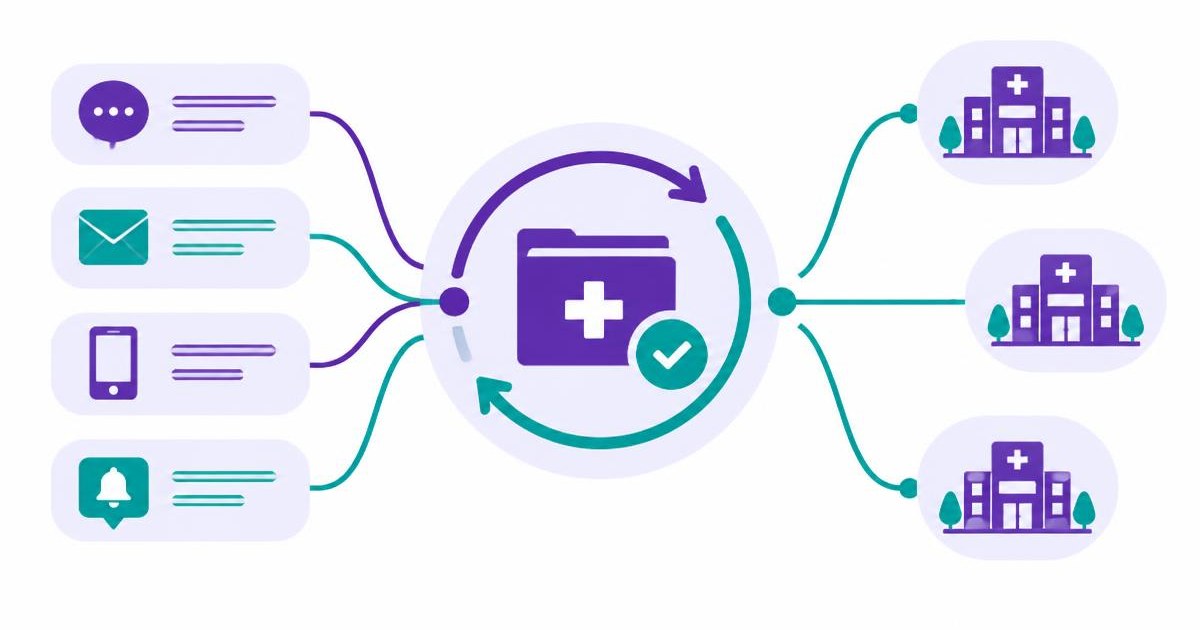
- One inbox for survey, call-centre, WhatsApp, app and walk-in feedback prevents complaints from sitting in separate silos.
- Accreditation reviewers look for evidence of action, so record who acted and when. [VERIFY WITH BRAND: specific CBAHI standard references.]
- Start with three metrics and one escalation rule rather than a 40-question survey.
On this page
Why Saudi hospitals still struggle with fragmented feedback
Feedback arrives from many doors: a printed form at reception, a call to the hospital contact centre, a complaint escalated through the Ministry of Health channel, a WhatsApp message, a social media post, and a ratings page. Each door has a different owner, and most do not share a record. The quality office assembles a monthly report by hand, weeks after the patient left. Branch managers argue about whose numbers are right. A multi-branch group sees the problem multiplied by the number of sites.
The accreditation context: what CBAHI reviewers want to see
The Central Board for Accreditation of Healthcare Institutions (CBAHI) is the national accreditation body for Saudi healthcare facilities. A recent narrative review of CBAHI appeared in PubMed Central in 2025. Our team could not open the full text during research, so we do not quote its figures here. In general terms, accreditation surveyors look for policies and, more importantly, evidence that they are followed. For patient experience that means a documented complaint process, defined response times, and proof of corrective action. [VERIFY WITH BRAND: exact CBAHI standards, edition and chapter numbers before publication.] A platform that timestamps each step produces that evidence as a by-product of daily work.
The five-step closed loop
- Capture: short post-visit surveys by SMS, WhatsApp or app, in Arabic and English, tied to the visit and department.
- Classify: sort each item as compliment, service issue, clinical concern or safety event. Clinical and safety items must route to the clinical quality or patient safety team, not the customer service queue.
- Assign: each item gets one owner and a response deadline.
- Recover: the owner contacts the patient, resolves the issue and records the action.
- Learn: monthly themes by department and branch feed a short improvement plan, and the next survey checks whether the issue improved.
Hospital complaint management system in Saudi Arabia: design rules that matter
Keep a single case ID across channels. Show patients their case status. Escalate automatically when a deadline is missed. Separate the patient-facing language from clinical terms. Protect identity: complaints can include sensitive health information, so apply role-based access and PDPL-aligned retention. [VERIFY WITH BRAND]
Linking feedback to the rest of the patient journey
Feedback is most useful when connected to context. A low score after discharge is more actionable if the coordinator can see the visit, the department and the follow-up plan. Link experience data to post-discharge follow-up (/blog/digital-post-discharge-follow-up-reduce-readmissions-saudi-hospitals) and to patient flow bottlenecks (/blog/patient-flow-management-bed-allocation-software-saudi-hospitals). Where the hospital already runs a patient app, surveys can trigger after the appointment automatically. [VERIFY WITH BRAND: native CareSync survey and complaint modules versus integrations.]
A worked scenario: outpatient waiting-time complaints
Imagine a four-branch hospital group where the quality office notices a cluster of low scores on waiting time at one branch's orthopaedic clinic. In a closed loop, each low score creates a case; the clinic manager contacts the patient the same day, records the cause (for example, clinicians starting late), and the monthly view shows the pattern. The group tests a schedule change and checks the next month's scores. This scenario is illustrative and does not claim a CareSync customer result.
What to measure (start small)
Pick three: percentage of complaints acknowledged within the target time; percentage closed within the target time; and a single recommendation or satisfaction question by department. Add an experience score by branch for group-level comparison. Resist adding metrics nobody will act on.
Vendor questions for patient experience software in KSA
Does it support Arabic and English natively, including RTL layouts? Can survey and complaint cases share one record? Can it integrate with the contact centre and the hospital information system? How are clinical and safety items separated? Can patients see case status? Where is data hosted and who can access verbatim comments?
FAQ
What is patient experience management software?
It is a platform that captures feedback and complaints from multiple channels, assigns each to an owner with a deadline, tracks resolution and reports themes by department and branch.
Does it help with CBAHI accreditation?
It can provide documented evidence of complaint handling and corrective action. Confirm the exact standards and edition with your quality team. [VERIFY WITH BRAND]
Which channels should a Saudi hospital collect feedback on?
Start with the channels patients already use: SMS or WhatsApp after visits, the hospital app, the contact centre and walk-in forms, unified into one case record.
How many survey questions are enough?
Fewer than most hospitals use. One satisfaction or recommendation question plus a free-text box and a flag for "contact me" is a practical start.
How do we keep complaint data private?
Use role-based access, limit who sees free-text comments, set retention rules, and review with your data protection officer under PDPL. [VERIFY WITH BRAND]
Sources
- CBAHI narrative review, PubMed Central PMC12635948 — title confirmed in search results, full text not reviewed; Saudi Ministry of Health, "Complaints Management" publication (listed in search results, not reviewed in full).