Antenatal Follow-Up Program for Private Clinics in Egypt: Visits, Reminders and a Shared Record
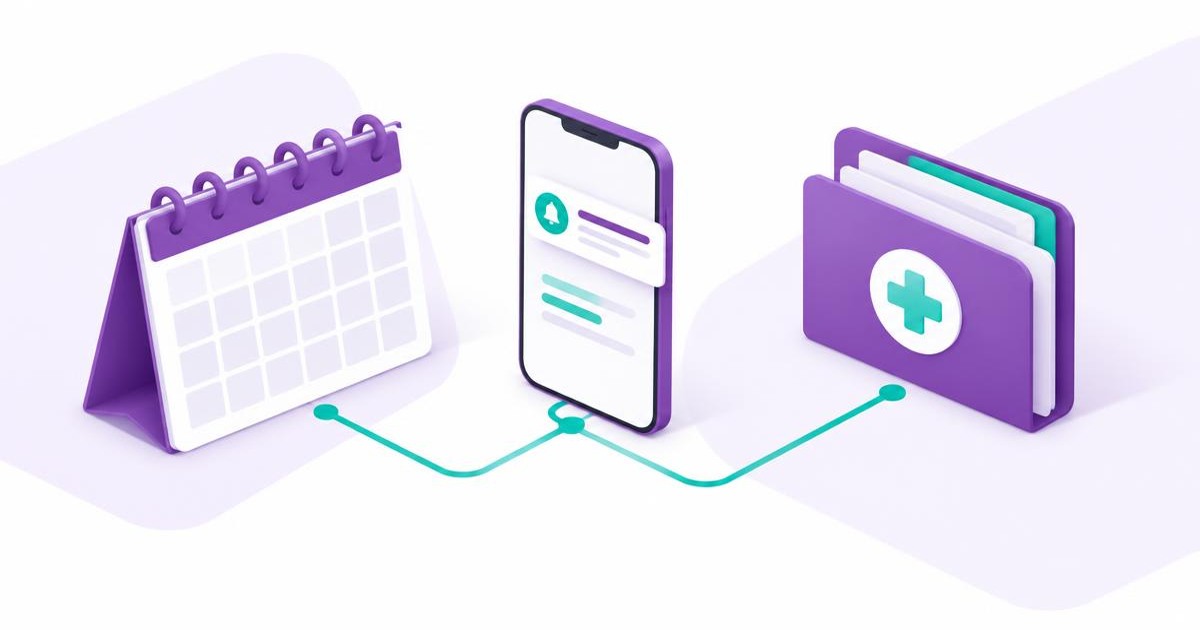
An antenatal follow-up program is a structured visit calendar, automated reminders and a shared record that keep pregnant patients on schedule between appointments. In Egypt, where most antenatal care is delivered in private facilities, clinics are well placed to run it, with the clinical content set by the treating obstetrician.
Key takeaways
- UNFPA Egypt's policy brief, citing the 2021 Egypt Family Health Survey, reports that 89.9% of women had at least four antenatal visits for their last pregnancy, and that 88.3% of those women received care mainly in private facilities.
- WHO's 2016 antenatal care model recommends eight contacts instead of four. Your own visit schedule is a clinical decision for your obstetricians. HOLD — expert review
- Women in the UNFPA research said they chose private antenatal care for flexible hours and easy access to providers.
- We make no claim that software changes the mode of delivery. That decision rests with the doctor and the patient. HOLD — expert review
On this page
Why this is a private-clinic opportunity
The UNFPA Egypt policy brief on caesarean sections reports that, in the 2021 Egypt Family Health Survey, 89.9% of women had at least four antenatal care visits for their last pregnancy in the preceding five years, and that 88.3% of those women received care mainly in private facilities. Women explained that private care offered flexible hours and access to providers at any time, while public facilities were seen as cheaper but crowded and open mainly in the mornings.
The same brief reports a caesarean section rate of 72.2% in 2021 (81% in private facilities and 63% in public facilities), up from 52% in 2014. It also reports that women often rely on mothers, mothers-in-law and sisters for information about labour, that many hold the belief "once caesarean, always caesarean", and that women say the attending doctor makes the final decision on delivery. We cite these figures to explain the setting, not to suggest that a follow-up program changes them. For a private clinic the practical point is simple: if most antenatal visits happen in clinics like yours, then clear schedules, reminders and records are your responsibility and your opportunity. HOLD — expert review for anything touching delivery decisions.
Five components of an antenatal follow-up program
1. A visit calendar built from your own protocol
At the first visit, generate the patient's calendar from the schedule your obstetricians use. WHO's 2016 model recommends a minimum of eight contacts through pregnancy, up from four; whether and how your clinic adopts that is a clinical decision. The software's job is to make the schedule visible to the patient and the front desk, not to define it. HOLD — expert review
2. Reminders in WhatsApp, with consent
A quasi-experimental study at the antenatal clinics of Women's Health Hospital, Assiut University, tested WhatsApp reminder messages with 100 pregnant women and reported significant improvements in antenatal knowledge and healthy behaviours between pre- and post-test (p = 0.001). The study had no control group, so the improvement cannot be separated from other influences, and a single-site sample of 100 is small. Treat it as encouraging, not conclusive. Use reminders for logistics (date, time, doctor, what to bring) and generic education, with the patient's consent and an easy way to stop them. See our guide to WhatsApp appointment reminders.
3. A shared record the patient can find
Ultrasound reports, laboratory results and visit notes often live in separate envelopes. A shared record where the clinic stores results and the patient can retrieve them reduces repeat requests at reception and lets another clinician see the history if the patient is seen elsewhere. See our overview of electronic health records for Egyptian clinics.
4. Education that includes the family
The UNFPA brief shows that relatives strongly influence what women know and expect. Our suggestion, not a finding from the brief: offer education material that a patient can share with her family, in clear Arabic, reviewed by your obstetricians, and invite a family member to a visit if the patient wishes.
5. Missed-visit recovery and a clear escalation rule
A missed antenatal visit should trigger a same-day call and an offer to rebook. Reminders must never be the channel for urgent symptoms: tell patients plainly which symptoms mean calling the clinic or going to an emergency department, as defined by your obstetricians. HOLD — expert review
Privacy: pregnancy information is health data
Keep reminder messages free of results, diagnoses or clinical advice. Record consent to be contacted by WhatsApp, limit record access by role, and confirm the obligations that apply to your clinic under Egypt's Personal Data Protection Law (Law No. 151 of 2020) with qualified counsel. See our article on patient data privacy for clinics. [VERIFY WITH BRAND]
Measure the program the clinic controls
Useful operational indicators are: the share of scheduled antenatal visits that are kept, the share of missed visits contacted the same day, reminder delivery and response rates, and the completeness of each patient's record. These show whether the process works. They do not show clinical outcomes, and we make no outcome claim. HOLD — expert review before any outcome claim is published.
An illustrative workflow: a two-obstetrician clinic in Alexandria
Illustrative workflow, not a client case. At the first visit the doctor confirms the pregnancy and the front desk creates the patient's visit calendar from the clinic's protocol, with her consent to WhatsApp reminders and a family contact. Each booked visit generates a confirmation and a reminder the day before. Results from ultrasound and laboratory visits are stored in the shared record. When a patient misses a visit, the coordinator calls that day and rebooks. The clinic reviews, monthly, the share of kept visits and missed visits contacted the same day. Nothing in the workflow changes what the obstetrician advises; it changes whether the patient is where the plan expects her to be.
How CareSync Clinic supports this
CareSync Clinic offers scheduling, reminders and a patient record for single- and multi-site clinics in Arabic and English. [VERIFY WITH BRAND] Confirm the current capabilities (recurring visit calendars, WhatsApp reminders, shared patient record, obstetric templates) before this section is promoted; do not assume obstetric-specific templates exist.
Frequently asked questions
Q1: How many antenatal visits are recommended?
A1: WHO's 2016 antenatal care model recommends eight contacts instead of four. The schedule a clinic uses is a clinical decision for its obstetricians and should follow local protocols. HOLD — expert review
Q2: Do WhatsApp reminders help pregnant women attend visits?
A2: A quasi-experimental study of 100 women at Assiut University's Women's Health Hospital found significant improvement in antenatal knowledge and healthy behaviours after WhatsApp reminders (p = 0.001), but it had no control group and a single site. The evidence is encouraging but limited, and it did not measure visit attendance.
Q3: How much antenatal care in Egypt is delivered privately?
A3: UNFPA Egypt's brief, citing the 2021 Egypt Family Health Survey, reports that 89.9% of women had at least four antenatal visits and that 88.3% of those women received care mainly from private facilities.
Q4: Can software reduce caesarean section rates?
A4: We make no such claim. The decision on mode of delivery rests with the doctor and the patient, and the brief we cite describes many influences on it. HOLD — expert review
Q5: What should a clinic never send in a WhatsApp message to a pregnant patient?
A5: Test results, diagnoses or urgent clinical advice. Keep messages to logistics and generic education, obtain consent, honour opt-outs, and tell patients which symptoms require a call or emergency care, as defined by your obstetricians. HOLD — expert review