From Discharge to Recovery: How Connected Home Care Platforms Are Closing Egypt's Post-Acute Care Gap
Explore connected home care in Egypt: structured care plans, remote monitoring, teleconsultation and caregiver support after discharge.
Key takeaways
- Explore connected home care in Egypt: structured care plans, remote monitoring, teleconsultation and caregiver support after discharge.
- Deployment scope, clinical protocols, privacy responsibilities and integrations should be agreed with the care team.
On this page
Egypt's healthcare system has long been capable of delivering strong in-hospital care. What it has struggled to sustain is what happens next.
The gap between hospital discharge and stable community-level recovery is where patient outcomes diverge most sharply — and where the Egyptian healthcare system loses the most ground. A patient discharged after cardiac intervention, orthopedic surgery, or a complex chronic disease exacerbation returns home to an environment that is often unstructured, poorly monitored, and disconnected from the clinical team that treated them. The result: unplanned readmissions, preventable complications, missed medication windows, and families managing clinical decisions they are not equipped to make.
This is not a capacity problem. Egypt's private healthcare sector — particularly the multi-specialty clinic groups and hospital networks that serve Cairo's insured population — has significant clinical talent and growing institutional capacity. The gap is structural: there has been no scalable infrastructure connecting inpatient discharge to community follow-up in a way that is systematic, branded, and clinically meaningful.
Connected home care platforms are beginning to close that gap. And for Egyptian multi-specialty clinics operating under insurance contracts and quality accreditation requirements, the case for deployment is now as operational as it is clinical.
The Egyptian Post-Discharge Reality
A 2026 report on Egypt's digital healthcare IT market identified care continuity and post-acute coordination as the most significant unmet need in Egypt's private healthcare sector. Without structured follow-up, the first signal that a discharged patient is deteriorating is an emergency department presentation — often at a different facility, breaking care continuity and generating additional cost.
In Egypt's household care culture, a family member is frequently the de facto care coordinator: managing medications, monitoring symptoms, deciding when to call the clinic. They receive a discharge summary, a prescription, and a follow-up appointment date — but lack a structured protocol, a channel to report concerns, and a way to distinguish normal from what requires clinical attention.
Egyptian private insurance companies have become more sophisticated in their review of provider quality metrics. Clinics with higher readmission rates face pressure on contract renewal terms. Demonstrating structured post-discharge follow-up is becoming a differentiating quality signal.
What a Connected Home Care Platform Does Differently
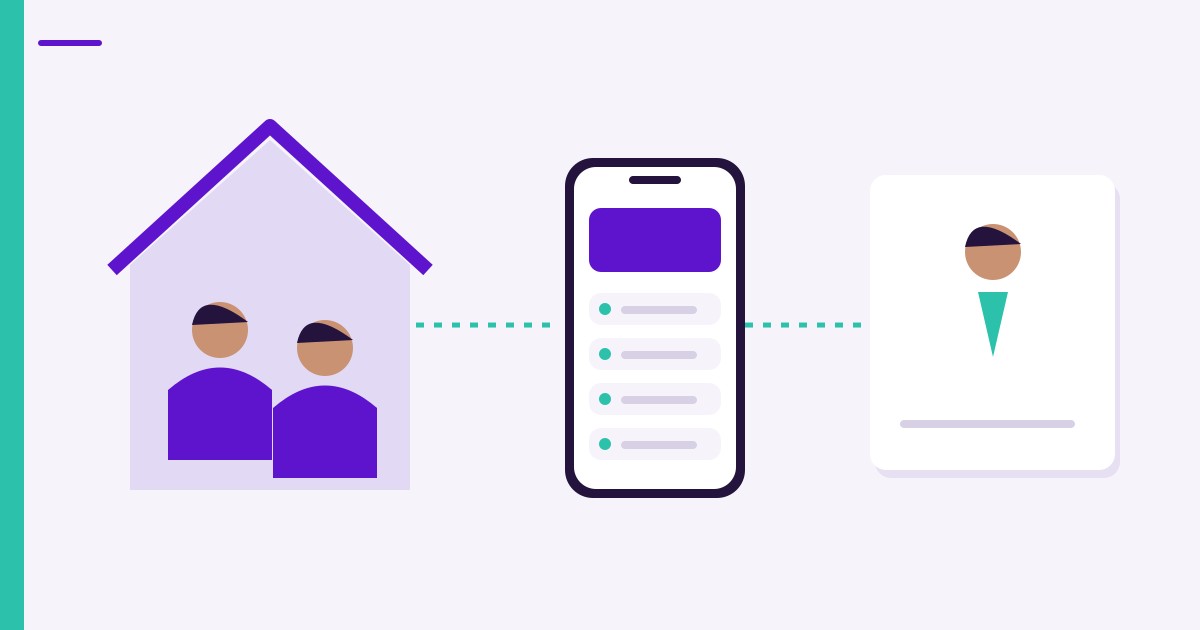
The difference between a connected home care platform and a traditional discharge protocol is architectural — replacing a one-time handoff with a continuous, structured communication and monitoring relationship between the clinic's care team, the patient, and the caregiver.
Structured care plans delivered to the patient's mobile device — After discharge, the patient and caregiver receive a step-by-step care plan in Arabic: daily medication schedules, wound care or physiotherapy instructions, dietary guidelines, red-flag symptoms, and scheduled check-in points.
Remote vital sign and symptom monitoring — For patients with monitoring devices, the platform receives readings and applies pre-set clinical protocols. A reading exceeding predefined thresholds triggers a care team alert — a clinical task for the follow-up nurse or physician, not a generic push notification.
Scheduled teleconsultation replacing unnecessary outpatient visits — A structured teleconsultation at day 7 and day 30 post-discharge removes burden from the patient while maintaining clinical oversight. In Cairo's traffic environment, eliminating one unnecessary clinic visit materially reduces the probability of missed follow-up.
A communication channel for caregiver-reported concerns — Family caregivers need a structured, appropriately triaged way to report concerns. A structured care-concern report routing to the appropriate clinical responder closes a critical safety gap.
Outcome documentation for insurance and accreditation — The structured follow-up record becomes the clinic's evidence base for insurance quality reviews, accreditation assessments, and internal quality improvement.
Where Egyptian Clinic Groups See the Greatest Impact
Post-surgical orthopedics and physiotherapy rehabilitation — Orthopedic recovery is protocol-driven, making it well-suited to structured digital care plans. Patient adherence to physiotherapy home programs is one of the most significant determinants of surgical outcome — and currently almost entirely unmonitored.
Chronic disease management: diabetes, hypertension, and heart failure — Egypt has one of the highest rates of type 2 diabetes in the region. A continuous digital monitoring relationship materially changes the probability of early detection of decompensation.
Post-oncology treatment follow-up — A structured digital follow-up channel extends the oncology team's reach into the home environment at a fraction of the cost of additional outpatient visits.
The Insurance Alignment Argument
A clinic demonstrating structured digital post-discharge follow-up — with documented touchpoints, outcome tracking, and a caregiver support channel — is positioned differently from one offering only a discharge summary. For clinic groups negotiating insurance provider agreements, this operational evidence is increasingly a negotiating asset.
The gap between discharge and recovery is where patients are most vulnerable. Closing it is the core obligation of continuous care — and it has never been more operationally achievable.
CareSync Egypt is built to close this gap: a connected home care platform in Arabic and English, with structured care plans, remote monitoring, teleconsultation, and caregiver support — configured to your clinical workflows.
Request a CareSync Egypt platform demo
Book Demo