Multi-Specialty Clinic Software: Managing Patients Across Departments
How multi-specialty clinics and polyclinics coordinate patient engagement across departments with one platform, instead of siloed per-specialty tools.
Key takeaways
- Multi-specialty software allows each department to maintain its own workflows and scheduling rules while sharing a unified patient record.
- Internal cross-department referrals transfer existing records in a few clicks, preventing patients from restarting intake as new cases in separate specialties.
- Phasing rollouts department by department—starting with the highest appointment volume—builds staff confidence and catches configuration mistakes while they remain inexpensive to fix.
Reviewed by the CareSync Medical Team · Last reviewed
On this page
By CareSync Team
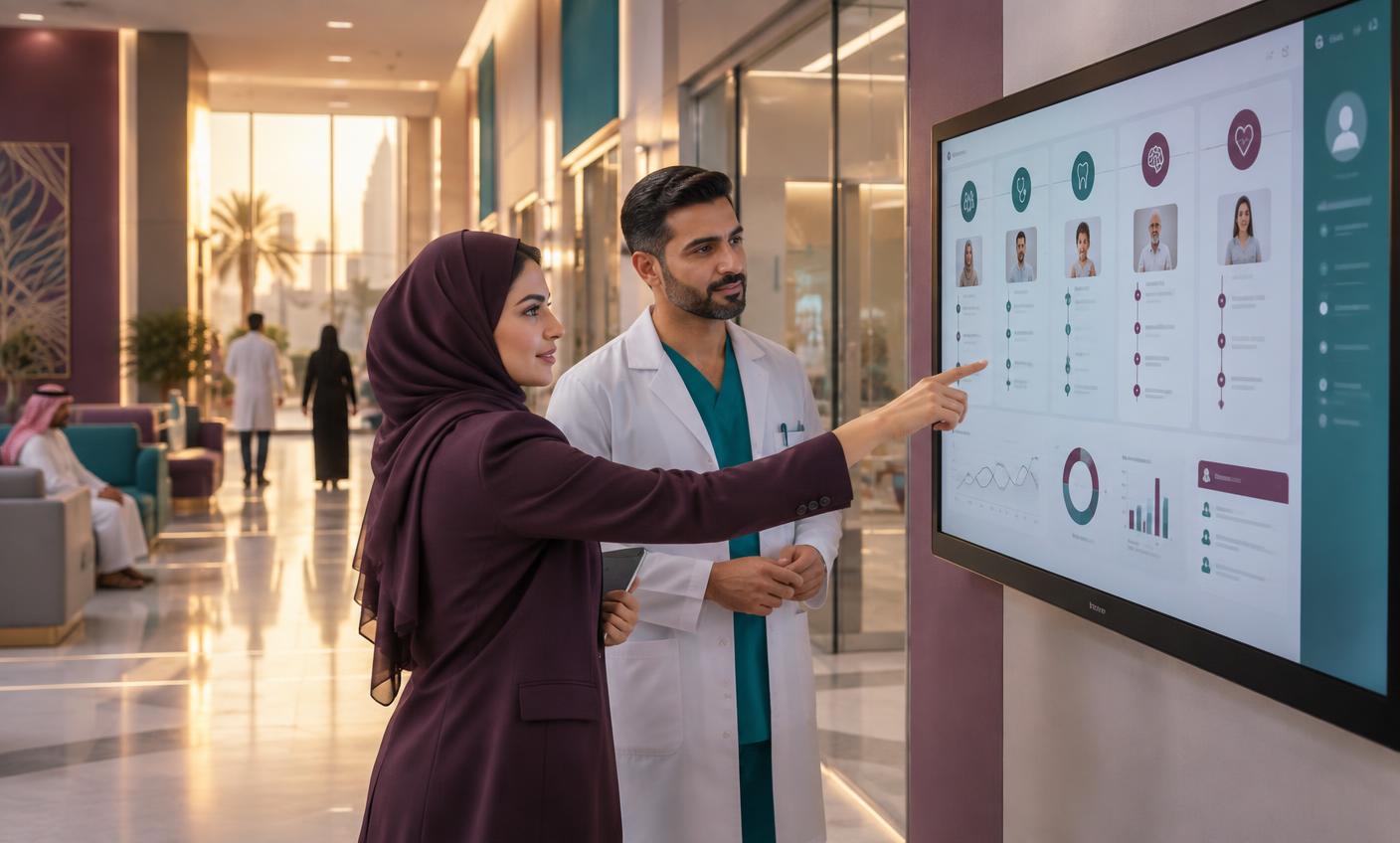
A patient seeing both dermatology and nutrition at the same polyclinic often ends up with two disconnected booking threads and two separate records, even though it's the same clinic and the same patient. Multi-specialty clinic software solves this by giving each department its own configuration while keeping one shared patient record and booking history underneath.
The silo problem in multi-specialty clinics
When each department runs its own scheduling and documentation process — common in polyclinics that grew department by department — a patient's relationship with the clinic fragments along department lines. A dermatologist has no visibility into the nutrition consult the same patient had last month, and the patient experiences the clinic as several disconnected practices sharing a building rather than one coordinated provider.
What unified multi-specialty software provides
| Element | What it does |
|---|---|
| Department-level configuration | Each specialty configures its own services, scheduling rules, and forms |
| Shared patient record | One patient profile and history visible across departments (with appropriate access controls) |
| Cross-department referral | A department can refer a patient internally without re-entering their information |
| Unified booking | Patients book across specialties from one interface, not a separate system per department |
Referral coordination between departments
Internal referrals are where the silo problem costs the most — a patient referred from one department to another internally should carry their existing record with them, not restart as a new patient in the second department's system. Software built for multi-specialty coordination makes this referral a few clicks within the same platform, rather than a phone call and a fresh intake form.
FAQ
Does multi-specialty software mean every department loses its own workflow? No — department-level configuration means each specialty keeps forms, scheduling rules, and services specific to its own practice; what's shared is the underlying patient record and cross-department visibility.
Is this relevant for a clinic with only two or three specialties? Yes — the fragmentation problem starts the moment a patient sees more than one department, regardless of how many specialties the clinic offers in total.
How does this affect patient experience, not just internal operations? Patients notice when a clinic "already knows" their history across departments versus starting from zero at every new specialty — that continuity is a meaningful part of perceived care quality.
Rolling out across specialties
Multi-specialty clinics get better results rolling out engagement tools department by department:
- Start with the specialty that has the highest appointment volume — early wins there build staff confidence for the rest
- Configure specialty-specific templates: a dermatology follow-up message reads differently from a paediatric vaccination reminder
- Keep one patient record across departments, so a patient seeing two specialists never receives duplicate or conflicting messages
- Give each department head visibility into their own specialty's engagement metrics, while management sees the consolidated picture
- Review cross-department referrals quarterly — the platform should make it easy to see whether internal referrals actually convert into completed visits
A phased rollout also surfaces configuration mistakes while they are still cheap to fix.
The bottom line
Multi-specialty clinics do not need more tools — they need fewer, better-connected ones. A single engagement platform that respects each specialty's workflow while keeping one patient record turns fragmented communication into a consistent experience. Evaluate vendors on cross-department coordination first, and on individual features second; the features are easy to demo, but coordination is what patients actually feel.
Related reading
If this topic is on your clinic's agenda, these related guides go deeper on the decisions around it — each is written for healthcare teams in Saudi Arabia and the GCC and follows the same evidence-qualified approach:
- Patient Retention and No-Shows in Saudi Clinics
- Clinic Booking Software vs. WhatsApp
- White-Label Clinic Apps vs. Clinic Management Systems
How CareSync fits
CareSync Clinic is the CareSync platform configured for clinics in Saudi Arabia and the GCC: a branded patient app with online booking, automated reminders, bilingual Arabic-English journeys and patient engagement tools, with scope and responsibilities agreed in writing for each deployment. We do not claim certifications we do not hold, and any integration scope is validated before timelines are committed.
Planning your next step? Talk to the CareSync team about your clinic's needs.
About CareSync
Prepared by the CareSync Medical Team. This article is educational, not medical advice or a substitute for clinical, legal or regulatory review. Research findings are source-specific, not measured CareSync outcomes.