The Digital Infrastructure Gap Limiting Egypt's Private Clinic Chains — and How to Close It
Unified patient records, central scheduling, billing and chain-level dashboards for Egyptian private clinic chains scaling across sites.
Scope note: market-growth, insurance and corporate-health statements are general context and have not been source-verified here. API integration with existing EMR or scheduling systems, billing and claims workflows, Egyptian billing codes and local support depend on vendor interfaces and the agreed deployment. Capabilities described are not measured CareSync outcomes.
Key takeaways
- Unified patient records, central scheduling, billing and chain-level dashboards for Egyptian private clinic chains scaling across sites.
- Deployment scope, clinical protocols, privacy responsibilities and integrations should be agreed with the care team.
On this page
Egypt's private healthcare sector is expanding. Driven by a growing middle class, persistent public sector capacity pressures, and increasing corporate health insurance penetration, private clinic chains are among the fastest-growing healthcare business models in Egypt's major urban centers — Cairo, Alexandria, Giza, and rapidly developing secondary cities.
The growth is real, but the operational model underpinning many expanding clinic chains has not kept pace. Chains that were built on the operational DNA of a single successful clinic — manual scheduling, paper or basic EMR documentation, cash-or-insurance billing at the desk, and doctor-centric patient relationships — find that those models fracture under the strain of multi-site scale.
The symptoms are recognizable: inconsistent patient experience across branches, appointment leakage to individual physicians rather than the clinic brand, no unified view of patient history across sites, manual aggregation of performance data for management reporting, and an inability to run centralized disease management programs that require follow-up coordination across the patient population.
Why the Single-Site Operational Model Breaks at Scale
A single successful clinic succeeds partly because the founding physician or clinic director knows patients, knows staff, and can correct quality problems by direct intervention. That tacit knowledge doesn't replicate across five, ten, or twenty branches.
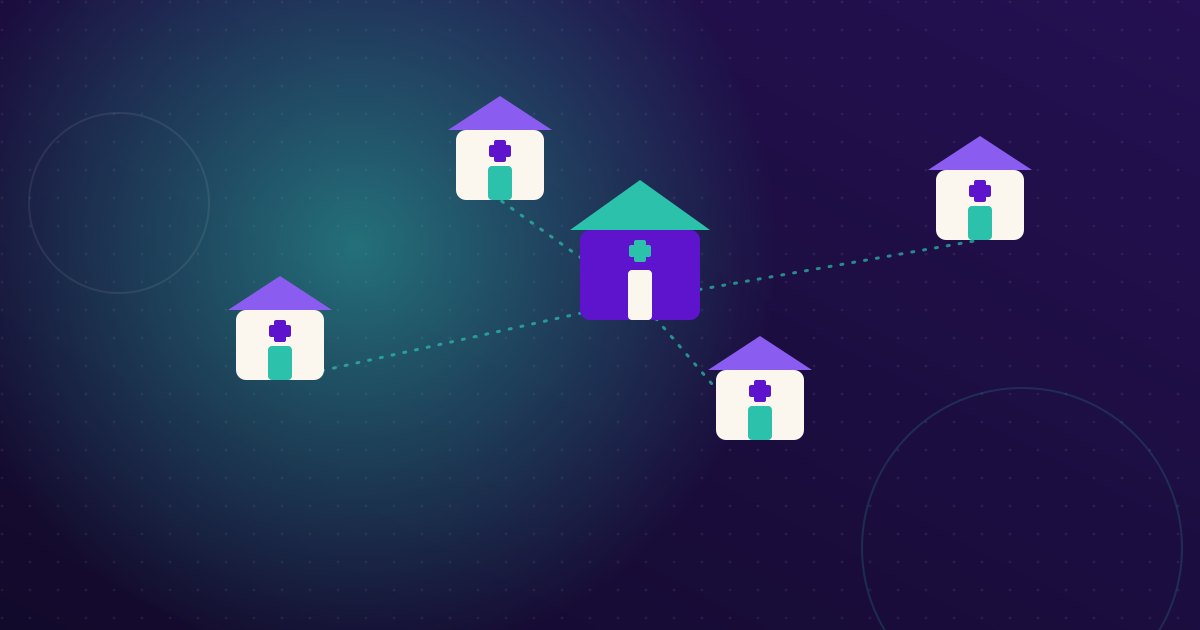
Without a connected operational platform, each new branch is effectively a standalone clinic — it generates revenue but contributes little to a shared patient database, brand-level quality improvement, or cross-site referral revenue. The clinic chain's competitive advantage should lie in its network — the ability to refer patients seamlessly between specialties and sites, to carry their history forward, and to manage chronic conditions across a longitudinal care relationship. Without connected infrastructure, that advantage is theoretical.
For investors and clinic chain operators considering further expansion, this infrastructure gap represents both a scalability ceiling and a diligence risk: demonstrating to corporate health insurers and large employers that the chain can deliver standardized, auditable care quality across all sites requires the data that only a connected platform produces.
What a Digital Operations Platform Provides at the Chain Level
A purpose-built digital operations platform for clinic chains addresses the infrastructure gap at four levels:
Patient continuity: A unified patient record — accessible by authorized clinicians at any branch — means the dermatologist at the Maadi branch can see the internal medicine notes from the patient's visit to the Nasr City branch last month. Referral coordination between branches uses a structured pathway rather than an informal message to a colleague.
Standardized scheduling and capacity management: Central appointment booking with real-time slot visibility across all branches reduces no-shows through automated SMS/WhatsApp reminders, supports load balancing across sites, and builds the appointment data foundation for performance reporting.
Billing and insurance workflow: For chains dealing with a mix of cash, Takaful, and commercial insurance payers, a centralized billing workflow with integrated claims management reduces coding errors, speeds claim submission, and provides finance leadership with consolidated revenue visibility across the network.
Management intelligence: Clinic chain operators and investors need consolidated operational metrics — patient volumes by branch and specialty, revenue per visit, no-show rates, physician productivity, net promoter scores from patient satisfaction surveys — in a dashboard that doesn't require weekly spreadsheet compilation. A connected platform makes this reporting continuous and automatic.
The Corporate Health Market Opportunity
Egypt's corporate health insurance market is growing, driven by employer mandates and a competitive talent market in banking, technology, FMCG, and telecommunications. Corporate health administrators purchasing clinic-based care for employees increasingly prefer providers who can demonstrate managed, standardized care across a geographically distributed network.
For clinic chains with corporate health ambitions, a connected digital platform is not only an operational necessity — it is a commercial credential. The ability to report on employee cohort health trends, demonstrate protocol adherence across all branches managing covered employees, and provide corporate clients with aggregate health utilization data is a differentiator in corporate health contracting negotiations.
Implementing Without Disrupting Operations
Clinic chains that have tried to implement enterprise digital platforms have often encountered a common failure mode: the platform requires replacing all existing systems simultaneously and creates months of operational disruption.
For established chains, look for platforms that:
- Layer over existing EMR or scheduling systems via API integration, rather than requiring system replacement
- Support phased branch onboarding — starting with two or three sites, proving the model, and expanding
- Provide Arabic-language interfaces at the patient and staff layer
- Offer local implementation and support teams familiar with Egyptian healthcare workflows
- Are designed for Egyptian billing codes, insurance plan structures, and regulatory documentation requirements
CareSync Clinic for Egyptian Private Clinic Chains
CareSync Clinic is designed for the multi-site private clinic context. The platform connects branch operations under unified patient management, supports scheduling and capacity coordination across sites, enables clinical data sharing for continuity of care, and provides chain-level management dashboards for operators and investors. Arabic-language patient interfaces support engagement in the Egyptian clinical context.
Connect every branch of your clinic chain
Request a CareSync Clinic Demo