After the Screening Result: A Follow-Up Program for Private Clinics in Egypt
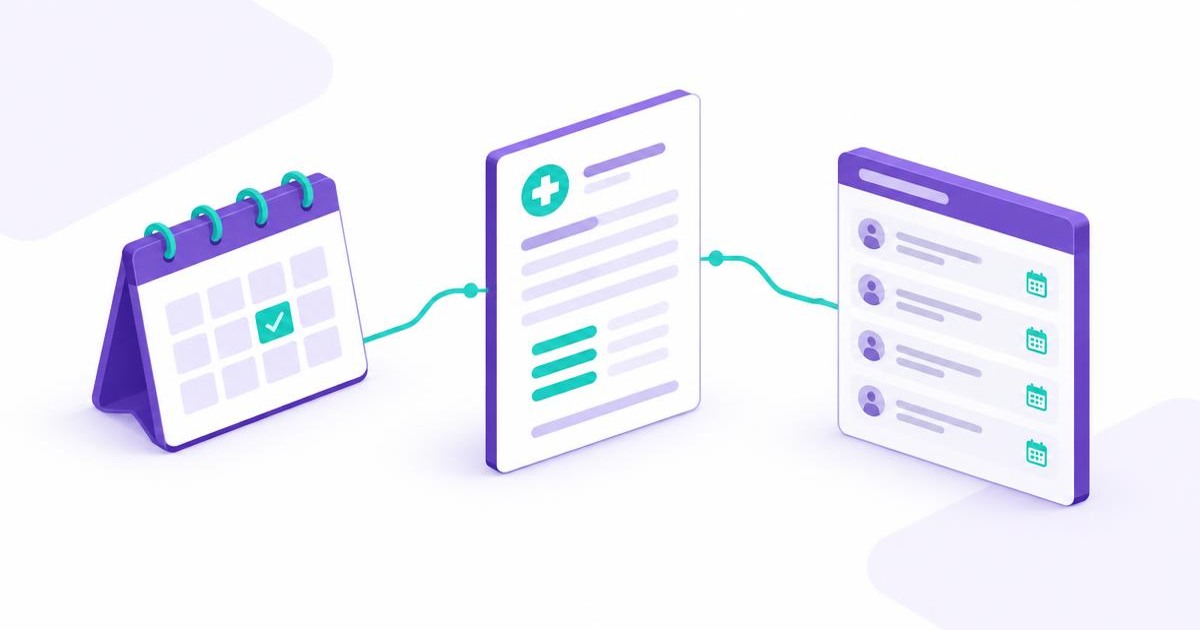
A post-screening follow-up program gives a private clinic one routine for patients who arrive with an abnormal screening result: confirm the result, book the diagnostic visit, send reminders, track attendance and set a recall date. Its purpose is to make sure a screening result becomes a clinical decision rather than a number that stays on a patient's phone.
Key takeaways
- Egypt has screened at national scale. A Business Forward AUC article reports more than 49.8 million people screened for non-communicable diseases and hepatitis C between October 2018 and April 2019, and Egyptian press reported on 8 October 2026 that 24 million people were screened for chronic disease and kidney impairment over eight years.
- We did not find a published figure for how many screened people complete follow-up for non-communicable diseases. Your clinic should measure its own.
- The program has five steps: capture, triage and book, remind, track attendance, recall.
- Clinical thresholds, timings and treatment decisions belong to your physicians. HOLD — expert review
On this page
Screening is the start of a pathway, not the end
Screening programmes find people; clinics decide what happens next. Egypt's scale is large. According to a Business Forward AUC article on the 100 Million Healthy Lives campaign, more than 49.8 million people aged 18 and over were screened for non-communicable diseases and hepatitis C between October 2018 and April 2019 at almost 5,800 sites, supported by a ministry-built system with a centralised patient database. Masrawy reported on 8 October 2026 that, under the wider "100 Million Healthy Lives" umbrella, 24 million people had been screened for early detection of chronic disease and kidney impairment over eight years; the report gave no follow-up or treatment figures.
Every screening programme has a funnel after the test. In the hepatitis C arm of the 2018–19 campaign, the same article reports about 2.2 million people referred for PCR testing and about 0.9 million who started a first treatment dose. That is a different disease and not a measure of non-communicable disease follow-up, but it is a reminder that referral and treatment numbers are always smaller than screening numbers.
On referral routes, the article states that insured patients were referred to hospitals under their insurance and uninsured patients to Ministry-affiliated hospitals. On that design, private clinics were not the formal referral destination. Our reading, not a sourced statement: patients still walk into private clinics with a result in hand, for a second opinion or because they prefer private care, and the clinic then owns whatever happens next. Check current referral rules with the Ministry of Health and Population. [VERIFY WITH BRAND]
Where the gap shows up for a clinic
It rarely looks dramatic. A patient shows a screening result at reception, the doctor reviews it, advises further tests and the visit ends. Nothing is recorded in a structured way, the patient is not contacted, and the clinic has no way to know who never came back for the diagnostic test. Multiply that by every patient who arrives with a result and the clinic is carrying an invisible backlog of undiagnosed or unmanaged patients. We found no Egypt-specific operational guidance for private clinics on this problem, which is why this article focuses on workflow rather than on screening itself.
A five-step post-screening follow-up program
Step 1. Capture the result at the front desk
Record the screening date, the source (for example "national initiative" or "employer screening"), the test, the value and the patient's consent to be contacted, in structured fields rather than a free-text note. Capture the preferred channel (WhatsApp, call or SMS) and a second contact.
Step 2. Triage and book the diagnostic visit
Let your physicians define the rules: which results need a diagnostic visit, how soon, and with whom. The clinic's job is to turn the rule into a booked appointment before the patient leaves, not a verbal suggestion. HOLD — expert review for all clinical thresholds and timings.
Step 3. Remind in the channel patients actually use
Send a confirmation immediately after booking and one or two reminders before the visit, in Arabic, with the doctor, branch and time. Keep messages logistical, never include results or diagnoses, and honour opt-outs. See our guide to WhatsApp appointment reminders for Egyptian clinics.
Step 4. Track attendance and recover no-shows
Mark each booked patient as attended or missed the same day. A missed diagnostic visit triggers a call and an offer to rebook, not a silent drop. This is where most of the value of the program sits. See our note on reducing no-shows in Egyptian clinics.
Step 5. Recall and register
Patients with a confirmed diagnosis move into a standing follow-up programme with recall dates set by the treating physician; those with normal diagnostic results get a rescreening date. Use one registry per condition so the clinic can see who is overdue. See our programmes for hypertension and diabetes follow-up.
Measure operations, not outcomes
Track what the clinic controls: the share of patients with a screening result who are contacted, who book a diagnostic visit, who attend, who have a recall date set, and who return within an interval your physicians choose. These are operational indicators. We make no clinical outcome claim for this programme. HOLD — expert review before any outcome claim is published.
Data protection: screening results are health data
Screening results are health information. Record consent to be contacted, limit who can see results, and keep reminder messages free of clinical content. Egypt's Personal Data Protection Law (Law No. 151 of 2020) applies to personal data processing; confirm the specific obligations for your clinic with qualified counsel. See our article on patient data privacy under Egyptian law for clinics. [VERIFY WITH BRAND]
An illustrative workflow: a three-branch clinic group in Greater Cairo
Illustrative workflow, not a client case. A patient arrives at a branch with a printed screening result showing a value the doctor wants investigated. Reception records the result in structured fields and the patient's consent to WhatsApp contact; the doctor orders the diagnostic test; the front desk books it before the patient leaves. That evening the patient receives a confirmation. The day before the test they receive a reminder. If the test is not done on the day, the care coordinator sees the patient on a missed-visit list the next morning and calls. When the result is back and the doctor confirms a diagnosis, the patient moves into the clinic's follow-up registry with a recall date. No step needs new clinical content; the change is that every step is recorded and someone owns the next one.
How CareSync Clinic supports this
CareSync Clinic is built for single- and multi-site clinics, with scheduling, reminders and a patient record in Arabic and English. [VERIFY WITH BRAND] Confirm the current capabilities (structured screening-result fields, missed-visit worklist, WhatsApp reminders, condition registries) before this section is promoted.
Frequently asked questions
Q1: What is Egypt's 100 Million Healthy Lives initiative?
A1: It is a presidential health initiative made up of several national campaigns. Business Forward AUC reports that its 2018–19 campaign screened more than 49.8 million people for non-communicable diseases and hepatitis C, and Egyptian press reported on 8 October 2026 that 24 million people were screened for chronic disease and kidney impairment over eight years.
Q2: Can a private clinic follow up patients who were screened in a national campaign?
A2: Patients can choose where to seek care, and a clinic can offer follow-up to those who arrive with a result, with consent to record and contact them. In the 2018–19 campaign, insured patients were referred to hospitals under their insurance and uninsured patients to Ministry-affiliated hospitals, so check current referral rules with the Ministry. [VERIFY WITH BRAND]
Q3: What should a clinic record when a patient brings a screening result?
A3: The screening date and source, the test and value, consent to be contacted, the preferred channel, and the booked diagnostic visit. Thresholds for action are set by the clinic's physicians.
Q4: How many reminders should a clinic send?
A4: Agree the cadence with your physicians and keep it light: a confirmation after booking and one or two reminders before the visit. Keep messages logistical, honour opt-outs and never send results by message.
Q5: Does a follow-up programme improve patient outcomes?
A5: We make no outcome claim. The programme improves what a clinic can control: contact, booking and attendance. Whether that translates into clinical outcomes should be assessed by your physicians. HOLD — expert review