Digital Specialist Referral Management for Egyptian Private Hospital Groups
How Egyptian private hospital groups can replace WhatsApp-based referral coordination with a structured digital platform—reducing no-shows, leakage, and administrative burden.
Editorial and legal review pending: the 15–20% referral-loss range and Cairo figures are unverified illustrations, not Egyptian benchmarks or CareSync outcomes. Confirm Law 151/2020 obligations, WhatsApp processing, transfer safeguards and residency with Egyptian counsel; digital tools alone do not establish compliance. HMS/UHIA connections, notifications and timelines depend on agreed deployment. Emergency referrals must use approved urgent-care pathways, never wait for a digital inbox.
Key takeaways
- How Egyptian private hospital groups can replace WhatsApp-based referral coordination with a structured digital platform—reducing no-shows, leakage, and administrative burden.
- Deployment scope, clinical protocols, privacy responsibilities and integrations should be agreed with the care team.
On this page
Key takeaways
- Egyptian private hospital groups lose 15–20% of specialist referral volume to no-shows and leakage annually—a problem that structured digital referral management directly addresses.
- WhatsApp-based referral coordination creates audit exposure under Egypt's Law No. 151 of 2020 (data protection) because patient data transits a third-party consumer platform outside the hospital's control.
- A three-stage digital referral workflow (initiation / acceptance + scheduling / closure + report) covers the full referral lifecycle and generates the audit trail that GAHAR assessors require.
- HMS integration at both the referring and receiving facility is the difference between a digital referral tool and a digital referral system.
Specialist referral coordination in Egyptian private hospital groups typically runs on a combination of phone calls, WhatsApp messages, and paper referral letters. The process works for low volumes but breaks at scale: referrals are lost between sites, patients do not receive appointment confirmation in time, and no-show rates for specialist appointments sourced from referral are significantly higher than for direct-booking patients.
The economic cost is real. A 300-bed private hospital group in Cairo processing 400 specialist referrals per month with a 15% no-show rate leaves 60 specialist slots unfilled each month that cannot easily be recovered. The administrative cost of chasing each referral through WhatsApp threads adds further waste.
The Three-Stage Digital Referral Workflow
Stage 1 — Referral Initiation
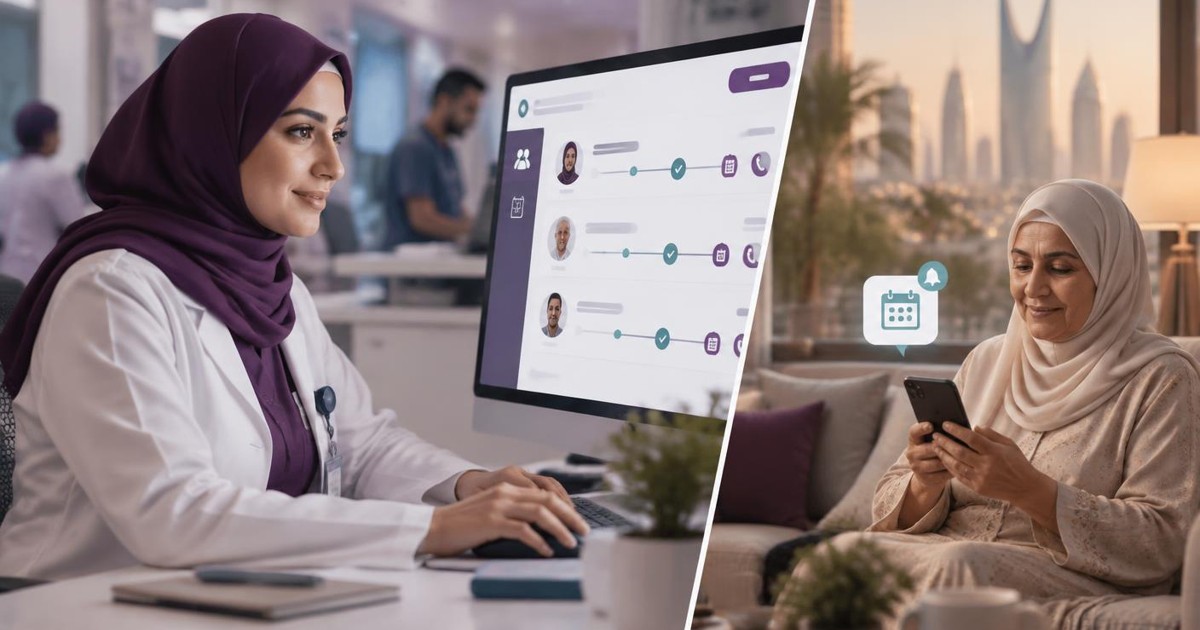
The referring clinician or primary care unit creates a structured referral record in the platform: patient demographic data, presenting complaint, clinical notes, urgency classification (routine / urgent / emergency), and the requested specialist or department. The referral is transmitted to the receiving facility's digital inbox—not a WhatsApp message thread.
Stage 2 — Acceptance, Scheduling, and Patient Notification
The receiving facility's referral coordinator reviews the incoming referral, accepts or routes it to the appropriate specialist, and assigns an appointment slot. The patient receives a confirmed appointment notification—SMS or in-app—with the specialist's name, clinic location, and date and time. This step converts a referral into a confirmed appointment before the patient has time to look for the same specialist at a competing facility.
Stage 3 — Referral Closure and Report Return
After the specialist appointment, the receiving facility closes the referral in the platform and returns a clinical summary to the referring clinician. This closes the clinical loop—a requirement for continuity of care that paper-based workflows rarely achieve in practice.
Why WhatsApp-Based Referral Coordination Creates Legal Exposure
Egypt's Law No. 151 of 2020 on Personal Data Protection requires that personal data, including health information, be processed with appropriate security measures and that data controllers implement technical and organizational safeguards proportionate to the sensitivity of the data processed.
WhatsApp is a consumer messaging platform operated by Meta Platforms, Inc. When a clinician sends a patient's name, diagnosis, and ID number via WhatsApp, that data transits Meta's infrastructure outside the hospital's control and without a data processing agreement that meets Law No. 151 requirements. HOLD — verify this legal position with Egyptian counsel before citing it in sales materials as legal advice.
A digital referral platform keeps patient referral data within a controlled, auditable system. The hospital can demonstrate to GAHAR assessors and, in future, to the Egyptian Data Protection Authority, that referral data is processed appropriately.
A Scenario: Cairo Multi-Site Group, 300 Beds
Note: This is a composite illustrative scenario. No real patient data or outcomes are attributed.
Consider a hypothetical 300-bed private hospital group operating two sites in Cairo, processing specialist referrals between internal departments and from affiliated primary care clinics. Before digital referral management, referrals between sites are managed via a dedicated WhatsApp group. Lost referrals average six to eight per month. No-show rate for referred specialist appointments is 18%.
After deploying a digital referral platform with HMS integration at both sites, the referral coordinator's time spent chasing each referral drops significantly. Patient confirmation rates increase because patients receive a structured appointment notification rather than a forwarded message. HOLD — do not publish specific no-show reduction percentages without real data from CareSync or a named peer-reviewed source.
Five Procurement Questions for a Referral Management Vendor
- HMS integration: Does your platform integrate with our current HMS for patient demographic lookup and appointment slot availability? Which Egyptian HMS platforms have you validated against?
- WhatsApp transition: Does the platform provide a migration path for referral coordinators currently using WhatsApp, including mobile-first access for clinical users?
- Law No. 151 compliance: Does the platform have a data processing agreement and security documentation that supports Law No. 151 compliance for health data?
- GAHAR audit trail: Can the platform generate referral logs, closure rates, and clinical summary return rates in formats usable in GAHAR accreditation assessments?
- UHIA referral receipt: Can the platform receive UHIA e-referrals digitally, in addition to managing internal and affiliate referrals?
Frequently Asked Questions
Is digital referral management only relevant for large hospital groups? A structured referral workflow adds value at any volume where referral coordination involves more than one clinician or one facility. For single-site facilities with low referral volumes, a simpler tool suffices. Multi-site groups or groups with affiliated primary care clinics gain the most from a full platform.
How does digital referral management reduce no-shows? The primary mechanism is confirmed appointment delivery. When a referred patient receives a structured appointment notification with clinician name, location, date, and time—rather than a message saying "we'll call you"—show rates improve. The secondary mechanism is proactive reminder automation before the appointment date.
Does the platform handle referrals from non-affiliated facilities? A well-designed referral platform handles both internal referrals (within the group's own sites) and external referrals (from affiliated or unaffiliated primary care clinics or other hospitals). The external referral flow typically uses a structured web form or a lightweight portal rather than requiring the external facility to adopt the full platform.
How long does implementation take? A single-site implementation with HMS integration typically takes four to eight weeks. A multi-site rollout with workflow training for referral coordinators typically requires three to four months. HOLD — verify these ranges against CareSync's actual implementation data.
Is the referral data stored in Egypt? Law No. 151 of 2020 restricts cross-border transfer of personal data outside Egypt to countries with adequate protection or under approved transfer mechanisms. [VERIFY WITH BRAND] whether CareSync's data residency meets Law No. 151 requirements before making data localization claims to customers.
Ready to replace WhatsApp-based referral coordination with a structured digital workflow? CareSync Network gives Egyptian private hospital groups a full specialist referral lifecycle platform—from structured initiation through confirmed scheduling to clinical summary return—with HMS integration and Law No. 151 compliant data handling.
Explore your Egypt care pathway with CareSync
Request a Demo