How Technology Improves Medication Adherence and Patient Outcomes: The Evidence
Text reminders and apps roughly double adherence; remote care lowers HbA1c. How Saudi providers and pharma can apply the evidence.
Key takeaways
- Digital text reminders and mobile apps roughly double the odds of medication adherence in patients managing chronic conditions.
- Clinician-connected telemedicine significantly improves clinical outcomes, lowering HbA1c by 0.38 percentage points alongside weight and blood pressure improvements in type 2 diabetes.
- Multimodal interventions combining personal feedback and clinician involvement consistently outperform isolated reminders or educational messages alone.
Reviewed by the CareSync Medical Team · Last reviewed
On this page
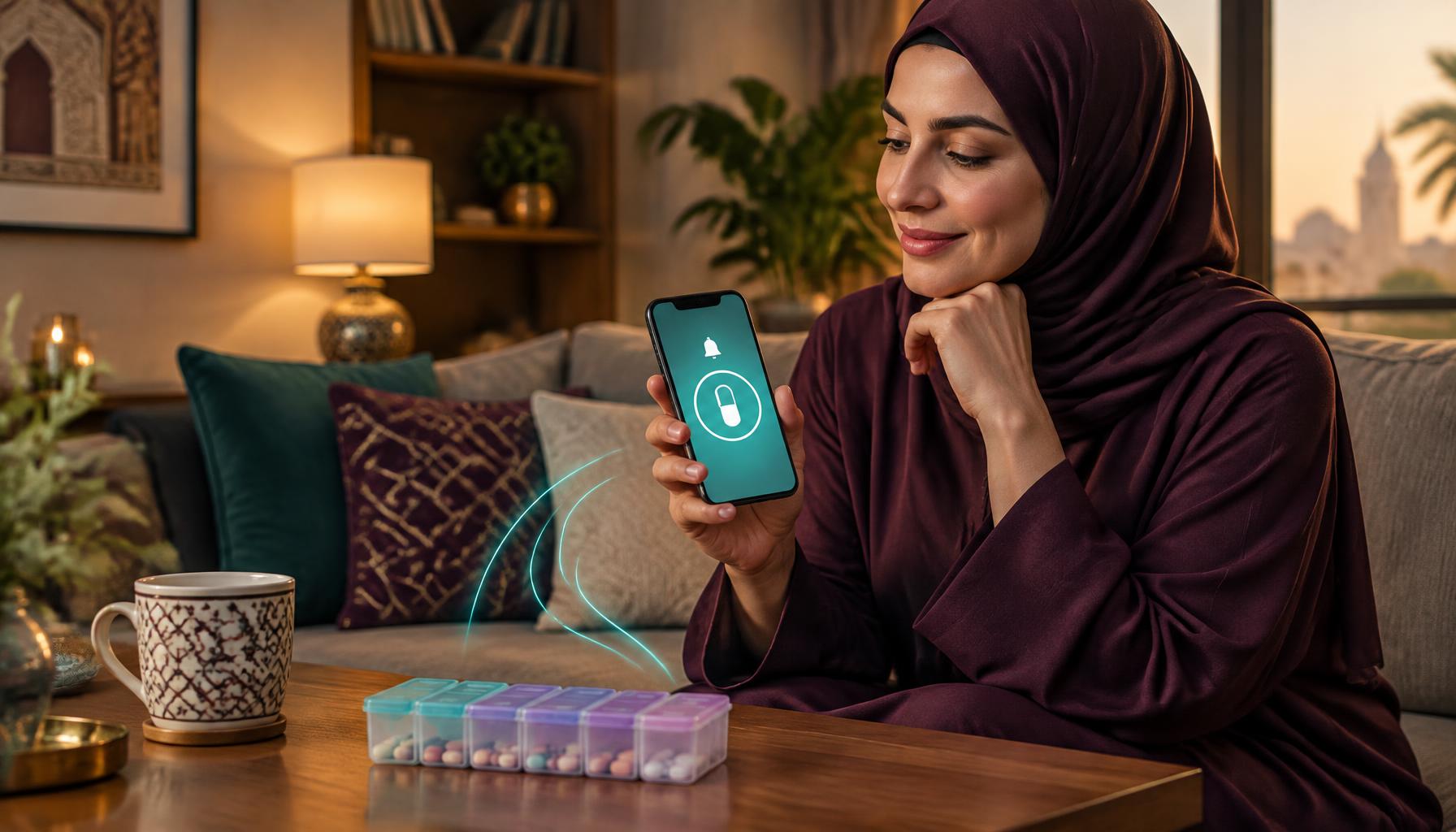
Medication adherence technology uses tools such as text reminders, mobile apps, connected devices and remote monitoring to help patients take medicines as prescribed and help clinicians act when they do not. The evidence is now strong enough to be specific: simple digital interventions roughly double the odds of adherence, and clinician-connected remote care measurably improves clinical outcomes.
For Saudi Arabia, where most patients live with a smartphone and many live with a chronic condition, these findings are directly actionable. This guide summarises what the research shows, what makes the technology work, and how to apply it in the Kingdom.
Key takeaways
- Adherence is the hidden driver of outcomes. Average adherence to long-term therapies is about 50%, and the WHO suggests improving it may deliver more health benefit than new treatments.
- Text reminders work. A JAMA Internal Medicine meta-analysis found text messaging roughly doubled the odds of adherence, raising an assumed 50% baseline to 67.8%.
- Assumed baseline adherence50%
- With text reminders67.8%
- Good adherence, Saudi T2D study (5,000+ patients)48.6%
Source: JAMA Internal Medicine meta-analysis of 16 trials, 2,742 patients.
- Apps work too. App-based interventions showed a similar effect, with an odds ratio of 2.12 for self-reported adherence.
- Clinician-connected care changes outcomes. In type 2 diabetes, telemedicine lowered HbA1c by 0.38 percentage points and improved weight and blood pressure.
- Design decides impact. Multimodal support, personal feedback and clinician involvement consistently outperform reminders alone.
Why does medication adherence decide patient outcomes?
A medicine only works if it is taken. The WHO's landmark report on long-term therapies called poor adherence the primary reason patients do not get the full benefit of their medicines, leading to complications, lower quality of life and wasted health resources. It also argued that improving adherence may deliver more health benefit than new technologies.
The WHO also stressed that patients are too often blamed, when health systems and providers strongly influence adherence. That is the opening for technology: many barriers are practical and predictable.
| Common barrier | Example from Saudi research | Where technology helps |
|---|---|---|
| Forgetting doses | The most common reason for non-adherence among type 2 diabetes patients in Jeddah | Reminders, refill alerts, smart packaging |
| Complex regimens | Taking many medicines was a frequently cited barrier in the same study | Simplified schedules, app-based medication lists |
| Side effects | Also frequently cited; a known driver of GLP-1 discontinuation | Symptom check-ins with escalation to the care team |
| Missed follow-up | Non-adherence to clinic follow-up linked to low medication adherence | Virtual follow-up, appointment reminders |
| Low visibility | Clinicians often cannot see what happens between visits | Remote monitoring and adherence dashboards |
The scale in the Kingdom is significant. In a real-world study of more than 5,000 Saudi patients with type 2 diabetes, only 48.6% had good adherence to oral diabetes medicines.
What does the evidence say about each technology?
| Technology | Key evidence | Effect | Main caveat |
|---|---|---|---|
| Text message reminders | Meta-analysis of 16 trials, 2,742 patients (JAMA Internal Medicine, 2016) | Odds of adherence about doubled (OR 2.11); 50% to 67.8% assuming a 50% baseline | Short trials, mostly self-reported adherence |
| Mobile apps | Meta-analysis of randomised trials (BMJ Open, 2020) | Higher self-reported adherence (OR 2.12) | Long-term use and sustainability not yet established |
| Digital support for oral cancer therapy | Meta-analysis of 11 trials (JMIR Cancer, 2025) | Lower risk of poor adherence (OR 0.60) | Specific to oral anticancer therapy |
| Telemedicine and remote monitoring in type 2 diabetes | Meta-analysis of 58 trials, 13,942 adults (JMIR mHealth, 2026) | HbA1c down 0.38 points; weight down 1.33 kg; systolic BP down 2.14 mmHg | High heterogeneity between trials |
| Multimodal patient programmes | Meta-analysis in inflammatory and immunologic diseases (2015) | Odds of adherence about 2.5 times; 42 more days on therapy | Disease-specific; programme designs vary |
Three conclusions hold across the evidence:
- Low-tech works. Text reminders are cheap and scalable, and the US Community Preventive Services Task Force recommends them for patients with chronic conditions.
- Adherence gains turn into clinical gains when clinicians are involved. The diabetes meta-analysis found larger HbA1c reductions when physicians or dietitians delivered the programme.
- Combining tools beats any single tool. Multimodal programmes outperform information or reminders alone.
The main limitation is honest to state: many trials are short and rely on self-reported adherence, so programmes should measure objective adherence, such as refill data, and clinical outcomes over at least 6 to 12 months.
What makes adherence technology actually work?
Technology improves adherence when it removes a real barrier and connects to someone who can act. Six design principles separate effective programmes from apps that are downloaded once and forgotten.
- Match the tool to the barrier. Reminders solve forgetting; they do not solve side effects or doubts about a medicine. Profile each patient's main barrier and choose the intervention accordingly.
- Keep a clinician in the loop. Outcomes improve most when data reaches someone who can adjust treatment. Route adherence flags and symptom reports to the care team, not just to a dashboard.
- Give personal feedback. Programmes that include personalised feedback on self-management are more likely to show clinical improvement than generic messaging.
- Make it effortless. Use channels patients already open daily, keep check-ins short and avoid duplicate logins. Every extra step lowers engagement.
- Build trust through the right brand. Patients engage more with support that comes from their own hospital or doctor than from an unfamiliar third party.
- Measure objectively. Combine self-reports with refill data, device readings and clinical markers, and track results for at least 6 to 12 months.
How should Saudi providers and pharma apply this?
Saudi Arabia has unusually good conditions for adherence technology. Internet penetration is 99%, more than 31 million people have used the Sehhaty app, and EY found 88% of Saudi respondents willing to share health data when it improves their care. Patients are ready; the task is to deliver support they trust.
For hospitals and health clusters:
- Start with one pathway, such as type 2 diabetes, and add reminders, home-reading capture and virtual follow-up to existing care.
- Show adherence and readings in a single clinician view, filtered to what needs action.
- Use results to support value-based contracts, where avoided admissions and better control translate into savings.
For pharma teams:
- Build adherence technology into Patient Support Programmes, especially for injectables, GLP-1 medicines and biologics where early drop-off is common.
- Deliver it through the treating provider's channel to keep clinical trust and context.
- Capture adverse events from every digital touchpoint and route them into pharmacovigilance.
For everyone: design Arabic-first, involve family caregivers with consent, and keep data in the Kingdom under PDPL.
How CareSync helps: CareSync is a white-label continuous-care platform built in Riyadh. It brings reminders, home monitoring, symptom check-ins and adherence dashboards into the provider's own brand, so patients get support from the team they trust and clinicians see what happens between visits.
Frequently asked questions
Does technology improve medication adherence? Yes. Meta-analyses show text message reminders and mobile apps each roughly double the odds of adherence, with the strongest results when tools are combined and clinicians are involved.
Do text message reminders really work? A JAMA Internal Medicine meta-analysis of 16 trials found text messaging about doubled the odds of adherence, equivalent to moving from 50% to 67.8% adherence. Most trials were short and used self-reported adherence.
Does better adherence improve clinical outcomes? It can. In type 2 diabetes, a 2026 meta-analysis of 58 trials found telemedicine lowered HbA1c by 0.38 percentage points and improved weight and blood pressure compared with usual care.
What is the most common reason patients miss medicines? Forgetting is consistently reported as a leading reason, including in Saudi studies of type 2 diabetes. Side effects, complex regimens and missed follow-up are also common.
How should adherence be measured in a programme? Use objective measures such as refill-based proportion of days covered, alongside clinical markers and patient-reported outcomes, over at least 6 to 12 months.
Is patient data from adherence apps protected in Saudi Arabia? Health data is sensitive personal data under the PDPL, so programmes need explicit consent, purpose limitation and compliant hosting and transfer arrangements.
Small nudges, big outcomes
The evidence is consistent: simple, well-designed technology helps patients take their medicines, and clinician-connected care turns better adherence into better health. Saudi Arabia has the connectivity, the patient willingness and the policy push to apply it at scale. What remains is designing programmes around real barriers, with clinicians in the loop and outcomes measured honestly.
Ready to improve adherence inside your own brand? Book a CareSync demo at care-sync.co.
About CareSync
This article was prepared by the CareSync Team, drawing on experience across pharma, medical affairs, market access and digital health in Saudi Arabia. CareSync is a white-label continuous-care platform built in Riyadh for hospitals, clinics and pharma Patient Support Programmes.
Sources
- World Health Organization. Failure to take prescribed medicine for chronic diseases is a massive, world-wide problem. Adherence to Long-Term Therapies: Evidence for Action, 2003.
- Thakkar, J. et al. Mobile telephone text messaging for medication adherence in chronic disease: a meta-analysis. JAMA Internal Medicine, 2016;176(3):340-349. Summary.
- Armitage, L.C., Kassavou, A. and Sutton, S. Do mobile device apps designed to support medication adherence demonstrate efficacy? A systematic review of randomised controlled trials, with meta-analysis. BMJ Open, 2020.
- Liao, W.C. et al. The efficacy of digital interventions on adherence to oral systemic anticancer therapy among patients with cancer: systematic review and meta-analysis. JMIR Cancer, 2025.
- Systematic review and meta-analysis of 58 randomised trials of telemedicine versus usual care in type 2 diabetes. JMIR mHealth and uHealth, 2026.
- Burudpakdee, C. et al. Impact of patient programs on adherence and persistence in inflammatory and immunologic diseases: a meta-analysis. Patient Preference and Adherence, 2015.
- Community Preventive Services Task Force. Text messaging interventions for medication adherence among patients with chronic diseases.
- Adherence to oral antidiabetic drugs among patients with type 2 diabetes in Saudi Arabia. Real-world study of more than 5,000 patients.
- Type 2 diabetic patients' adherence towards their medications. National Guard Health Affairs, Jeddah.
- Adherence to oral hypoglycemic medication among patients with diabetes in Saudi Arabia.
- Rodriguez, P.J. et al. Discontinuation and Reinitiation of Dual-Labeled GLP-1 Receptor Agonists Among US Adults With Overweight or Obesity. JAMA Network Open, 2025.
- Ministry of Health. Health Sector Transformation Report 2025 highlights health achievements, 2026.
- EY. How digital health is driving more connected care in Saudi Arabia, 2026.
- DataReportal. Digital 2025: Saudi Arabia, 2025.