From Single Clinic to Multi-Site Chain: The Digital Infrastructure Egyptian Healthcare Groups Need to Scale
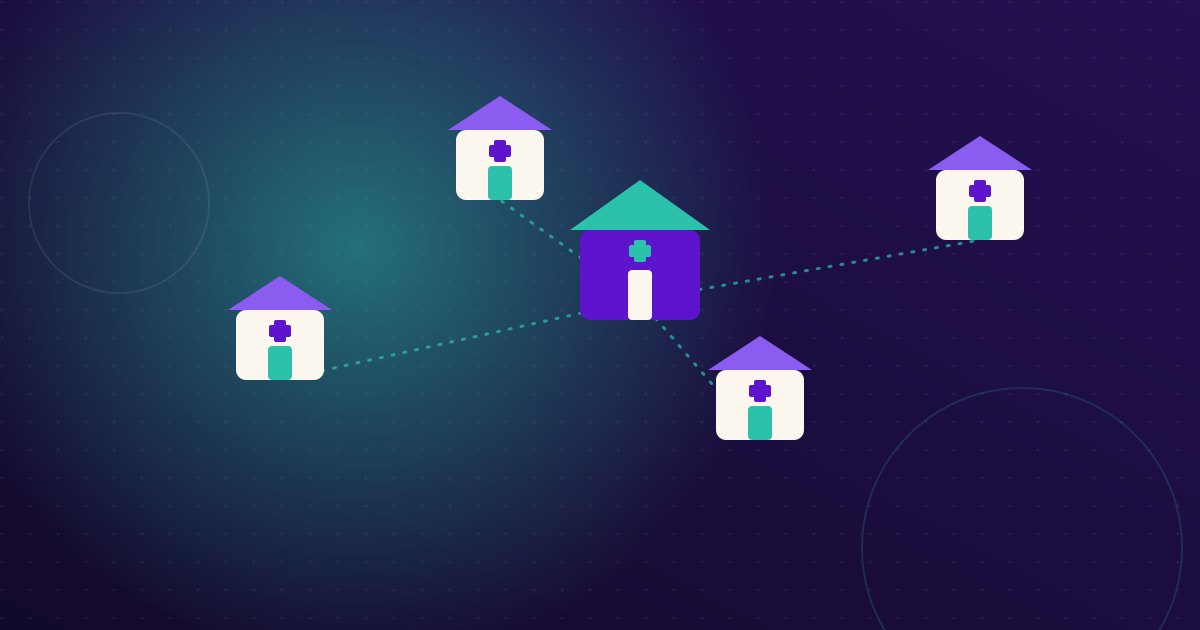
Unified records, central scheduling, shared protocols and consolidated reporting for Egyptian clinic chains growing to 3–10+ sites.
Scope note: growth-stage descriptions and market statements are general context, not source-verified data. Onboarding timelines, pharmacy coordination, teleconsultation and multi-site reporting depend on the agreed deployment. Benefits described are potential, not measured CareSync outcomes.
Key takeaways
- Unified records, central scheduling, shared protocols and consolidated reporting for Egyptian clinic chains growing to 3–10+ sites.
- Deployment scope, clinical protocols, privacy responsibilities and integrations should be agreed with the care team.
On this page
Egypt's private clinic sector is experiencing a wave of expansion. Physician-led single-site clinics that established strong patient bases through the 2010s are now at the inflection point where scaling to three, five, or ten locations becomes operationally viable — and where the informal systems that worked at one site become structural liabilities at three.
The scaling challenge for Egyptian clinic chains is not primarily a capital problem. It is an operational infrastructure problem. A clinic group expanding from one location to four without a shared patient record system, a standardized clinical protocol framework, and centralized administrative visibility will typically encounter a predictable set of failure modes: inconsistent clinical standards across sites, appointment booking fragmented across WhatsApp and manual scheduling systems, pharmacy inventory managed separately at each branch, and no consolidated picture of which patients are actively engaged and which have lapsed.
This article examines the specific digital infrastructure requirements for Egyptian clinic chains at each stage of multi-site growth, and how purpose-built health-tech platforms support the transition from a successful single-site practice to an operationally coherent clinic group.
The Growth Stages and Their Infrastructure Implications
Clinic chains in Egypt typically go through three distinct stages of operational complexity as they scale, each with different infrastructure requirements:
Stage 1: The second and third site (2–3 locations). The most common failure mode at this stage is replicating the single-site model at each new location independently — separate patient records, separate scheduling systems, separate pharmacy stock management, and a separate team at each site that has little operational visibility into the others. Owners and clinical directors spend disproportionate time physically moving between sites to maintain quality standards. The patient who visits both the Heliopolis and Maadi sites of the same clinic group is effectively a new patient at each location.
Stage 2: The regional cluster (4–7 locations). At this stage, the operational complexity outgrows what can be managed through founder oversight. Consistent clinical quality requires documented protocols, not personal supervision. Staff management requires centralized HR visibility. Financial management requires consolidated P&L across sites, not separate books maintained at each location. The patient experience requires that a clinical record exists across all sites, not just at the location of the patient's first visit.
Stage 3: The clinic network (8+ locations). At this scale, the clinic group is functioning as a healthcare network, not a clinic operator. Insurance and corporate health contracts become significant revenue lines. Aggregate clinical outcome data becomes a business development asset. The clinical informatics and operations teams are structurally separated from the clinical teams, with distinct responsibilities.
The digital infrastructure required at Stage 3 cannot be retrofitted onto a system architected for Stage 1. The groups that successfully navigate this transition typically make a deliberate infrastructure investment at Stage 2 — before the complexity becomes unmanageable — rather than after.
What Shared Infrastructure Actually Requires
The term "shared system" is often used loosely in conversations about clinic expansion. In operational terms, shared digital infrastructure for a clinic chain requires at minimum:
A unified patient master record across all sites. Every site must be able to access the same clinical record for each patient, updated in real time, regardless of which site the patient originally registered at. This requires a cloud-based patient management system with role-based access controls and consistent data architecture across all locations.
Centralized appointment management with site-level visibility. The ability to view, book, and reschedule appointments across all sites from a single administrative interface is foundational for any clinic group with more than two locations.
Standardized clinical protocol templates. Clinical quality consistency across sites requires documented, accessible protocols — chronic disease management pathways, prescribing guidelines, referral criteria — that are available to every physician and clinical staff member at every site.
Consolidated financial and operational reporting. The clinic group's management cannot make informed expansion, staffing, or investment decisions without consolidated financial visibility across all sites.
Pharmacy and supply chain coordination. For clinic groups with dispensing pharmacies at multiple sites, shared inventory management — with centralized procurement, automated reorder alerts, and site-to-site transfer visibility — reduces both cost and stockout risk.
The Role of Digital Health Platforms in Clinic Chain Operations
Purpose-built health-tech platforms for clinic chain management differ from generic practice management software in several important ways:
Configuration depth. Generic practice management systems are designed for single-site or small-group practices. They typically cannot support multi-site patient record access, cross-site appointment management, or consolidated reporting at the network level without significant customization.
Patient-facing engagement. A clinic chain that relies on patients calling each site directly is foregoing the ability to offer a unified, seamless experience across all locations through a single app or patient portal. This matters for patient retention and for corporate health contracts.
Clinical governance support. The ability to deploy and monitor clinical protocols across sites requires a platform that supports structured clinical documentation, not just appointment scheduling and billing.
The Insurance and Corporate Health Dimension
Egypt's evolving health insurance landscape — both the UHI rollout and the private insurance and corporate health segment — is creating new market dynamics for clinic chains. Insurance contracts and corporate health agreements are increasingly structured around network membership: standardized quality credentials, consistent service delivery documentation, and aggregate outcome reporting.
For clinic groups that aspire to compete for these contracts, digital infrastructure is not a back-office investment: it is a prerequisite for market access. A clinic chain that cannot provide a corporate health manager with consolidated data on appointment adherence, referral rates, and chronic disease management outcomes will lose that contract to a competitor that can.
CareSync Clinic for Egyptian Multi-Site Operations
CareSync Clinic is designed for the specific operational requirements of single and multi-site clinic operators. For Egyptian clinic chains navigating the transition from Stage 1 to Stage 2 or Stage 3 operations, the platform offers:
- Multi-site patient record management, allowing any authorized clinician or administrative staff member at any site to access the full patient record.
- Centralized appointment management with site-level and network-level views.
- Clinical protocol templates configurable to the clinic group's service lines and patient population.
- Patient-facing app with Arabic and English language support, enabling digital appointment booking, teleconsultation access, prescription tracking, and test result access across all sites from a single patient interface.
- Consolidated operational reporting across sites, with configurable dashboards for group management and site-level operations.
- Care coordinator tools for chronic disease follow-up management.
- Pharmacy coordination module for clinic groups with multi-site dispensing operations.
Practical Implementation Guidance for Egyptian Clinic Groups
Start with the patient record unification. Before standardizing clinical protocols or centralized reporting, ensuring that every site operates on a single patient record system eliminates the most immediate quality and patient experience problems.
Invest in staff onboarding before go-live. Plan for two to four weeks of structured onboarding per site, with a designated system champion at each location.
Phase the feature rollout. Start with patient record management and appointment scheduling, then add clinical protocols and patient-facing features, then operational reporting.
Plan for Egyptian connectivity realities. Cloud-based systems must function on the variable internet connectivity typical of Cairo and Alexandria commercial settings.
Conclusion
The Egyptian clinic groups that have successfully scaled to 10 or more locations share a common characteristic: they made the infrastructure investment at the inflection point, not after the operational problems became visible. Building a clinic chain on consistent digital infrastructure protects clinical autonomy — by ensuring protocols are accessible, outcomes are measurable, and management has the visibility to support clinical teams.
Ready to explore what CareSync Clinic can support for your multi-site expansion in Egypt? Request a demo tailored to your current site count and growth plans.
See how CareSync Clinic supports Egyptian clinic chain expansion
Request a Demo