Sickle Cell Disease Follow-Up Program: A Practical Guide for Saudi Hospitals
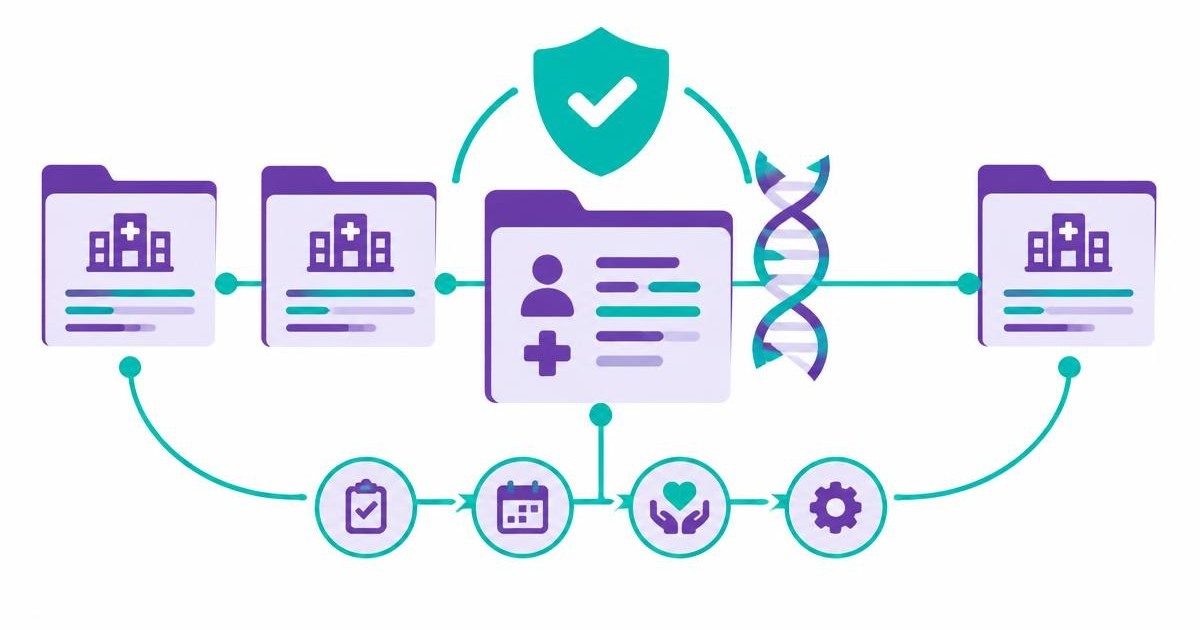
A sickle cell disease follow-up program for Saudi hospitals combines a patient registry, scheduled medication and clinic checks, a fast-track route for pain crises, and a structured handover from paediatric to adult care. Digital tools help by making each step visible across clinics, so continuity no longer depends on patients remembering to return.
Key takeaways
- Sickle cell disease is common in Saudi Arabia, with the highest burden reported in the Eastern Province, so follow-up is a core hospital service rather than a niche one.
- The programme has five parts: registry, medication follow-up, crisis fast-track, adolescent transition and caregiver education in Arabic.
- Saudi pilots of digital follow-up exist but are small; treat them as promising, not proven.
- A registry that holds patient data needs a clear consent and PDPL approach from day one.
On this page
Why sickle cell follow-up belongs on the hospital operations agenda
A Qatif Health Network haematology consultant told Al Watan that sickle cell disease affects about 2.3% of people in Saudi Arabia and is most prominent in the Eastern Province, followed by the southern and western regions. A study in Frontiers in Pediatrics estimated roughly 61,000 patients with the disease in the Kingdom. Johns Hopkins Aramco Healthcare reported that in 2015 its teams saw up to 150 sickle cell cases a month, often through emergency services, and that as many as one in five hospital admissions in the Eastern Province relate to the condition. Those numbers describe a recurring operational load: pain crises, emergency visits, admissions and long-term outpatient care.
The Eastern Province response is instructive. JHAH opened a centralised infusion clinic in April 2017, modelled on the Johns Hopkins sickle cell centre, and a dedicated sickle cell programme with a coordinator. The lesson for other hospitals is organisational: patients do better served by a team that owns the pathway than by episodic emergency contact.
What Saudi research says about digital follow-up
- Caregiver readiness: A cross-sectional study at the Armed Forces Hospital Southern Region in Khamis Mushayt, which runs a multidisciplinary sickle cell clinic, assessed caregivers' awareness, perceptions and readiness to adopt a digital follow-up and education system for children with sickle cell anaemia.
- App pilot: A 2025 mixed-methods thesis at the Saudi Digital Library tested an "SCD-care" mobile app for adolescents and young adults. Of 93 potential participants, 53 completed the pre-intervention phase and 43 completed all phases; the authors reported improvements in health-related quality of life, self-management and coping. It is a pilot, not a controlled trial.
- Pathway discipline: A 2025 BMJ Open Quality study at a Saudi tertiary hospital found that before a referral guideline was introduced, 75% of paediatric referrals to haematology/oncology were inappropriate and 86% of patients had unnecessary investigations. The study shows how much avoidable work sits in unstructured pathways.
- National programmes: Speakers quoted by Al Yaum on World Sickle Cell Day said the Ministry of Health has screened more than 900,000 newborns since 2023 and has launched the "Mahja" quality-of-life programme and a "90 Days" programme for patients and families.
The five-part programme
1. A registry that doubles as a worklist
List every patient with genotype, current treatment, last review date, last admission, and next due action. A registry that only counts patients is a report; one that shows who is overdue is a worklist. For the broader design see our guide to rare-disease registries.
2. Medication and review follow-up
Hydroxyurea has been the mainstay of treatment since the mid-1990s according to a Saudi haematology consultant quoted by Sayidaty, yet many patients do not know its benefit. Treatment decisions belong to haematologists; the digital role is to remind, record and flag. Track whether prescribed treatment is being collected and taken, schedule laboratory monitoring, and flag missed reviews to the nurse or coordinator.
3. A fast-track route for pain crises
Agree a written pathway so a patient in crisis reaches appropriate care quickly: a telephone or app contact for the sickle cell team, a protocol shared with the emergency department, and a record that follows the patient between sites. Build this with the emergency and haematology teams; a platform cannot replace clinical protocols.
4. Adolescent-to-adult transition
The SCD-care pilot was designed around a gap the authors describe: a lack of structured self-management transition for adolescents moving to adult care. Use the registry to flag patients approaching transition age, schedule joint paediatric-adult reviews, and give teenagers their own app access alongside caregivers.
5. Arabic caregiver and patient education
Education delivered by a patient educator works better when it is trackable. Short Arabic modules for families, reminders before reviews and a way to ask the team a question help keep the programme alive between visits. Our article on patient-educator software covers the workflow.
A worked scenario (illustrative)
Imagine a hospital group in the Eastern Province with a main hospital and two satellite clinics. A 16-year-old patient is flagged by the registry as approaching transition age and overdue for a laboratory review. The coordinator sends an Arabic reminder to the patient and caregiver, books a joint paediatric-adult visit at the clinic nearest their home, and records the visit outcome in the shared record. When a crisis occurs six weeks later, the emergency team sees the treatment history without a phone call. This illustrates the workflow, not a reported customer result.
Where pharma support programmes fit
Some sickle cell therapies are supported by manufacturer patient support programmes. If a pharma company funds part of the follow-up, the programme needs clear separation between hospital clinical records and sponsor-level reporting, explicit patient consent for any data sharing, and adverse-event handling that follows the manufacturer's safety process. See our guides on PDPL-compliant patient support programmes and digital enrolment and consent.
Data and compliance
A sickle cell registry holds genetic-condition and health data about identifiable patients, including children. Plan the lawful basis, consent and guardian-consent approach, access controls and hosting before launch, and confirm requirements against the Personal Data Protection Law with your compliance team.
What to measure
- Share of registered patients with a review in the last scheduled interval
- Emergency visits and admissions per patient, against your own baseline
- Time from crisis call to clinical contact
- Medication collection and refill continuity
- Adolescents with a completed transition review before adult handover
How CareSync supports the programme
CareSync Network gives hospital groups one connected record, nurse and coordinator worklists, and Arabic and English patient messaging across sites. For manufacturer-funded support, CareSync PSP Connect is built for pharma patient support programmes.
Frequently asked questions
What is a sickle cell disease follow-up program? A structured service that tracks every patient from diagnosis through adulthood: registry, scheduled reviews, medication follow-up, a route for pain crises, and education for patients and families.
How common is sickle cell disease in Saudi Arabia? A Qatif Health Network haematology consultant cited a prevalence of about 2.3%, highest in the Eastern Province, and a Frontiers in Pediatrics paper estimated around 61,000 patients. Figures vary by source and region.
Can an app help adolescents with sickle cell disease? A Saudi pilot of a chronic-care app for adolescents and young adults reported improved quality of life and self-management among 43 participants who completed the study. It is early evidence from a small pilot and does not replace clinical care.
What consent does a sickle cell registry need under PDPL? It holds sensitive health data, sometimes about children, so a provider should define lawful basis, patient or guardian consent, access rules and hosting with its compliance team.
Can pharma companies fund sickle cell patient support in Saudi Arabia? Manufacturers can run patient support programmes with hospitals, provided consent, data separation and safety reporting are handled correctly. Each programme should be reviewed against current regulations.
Sources
- Al Watan interview with Dr Abdullah Al Zayed, Qatif Health Network
- Frontiers in Pediatrics 2023 (doi 10.3389/fped.2023.1195040)
- Johns Hopkins Aramco Healthcare sickle cell programme page
- PMC article on caregiver readiness for digital follow-up of sickle cell anaemia, Armed Forces Hospital Southern Region
- Saudi Digital Library thesis on the SCD-care app (2025)
- BMJ Open Quality, sickle cell referral guidelines at a Saudi tertiary hospital (2025)
- Al Yaum, World Sickle Cell Day coverage
- Sayidaty interview on hydroxyurea